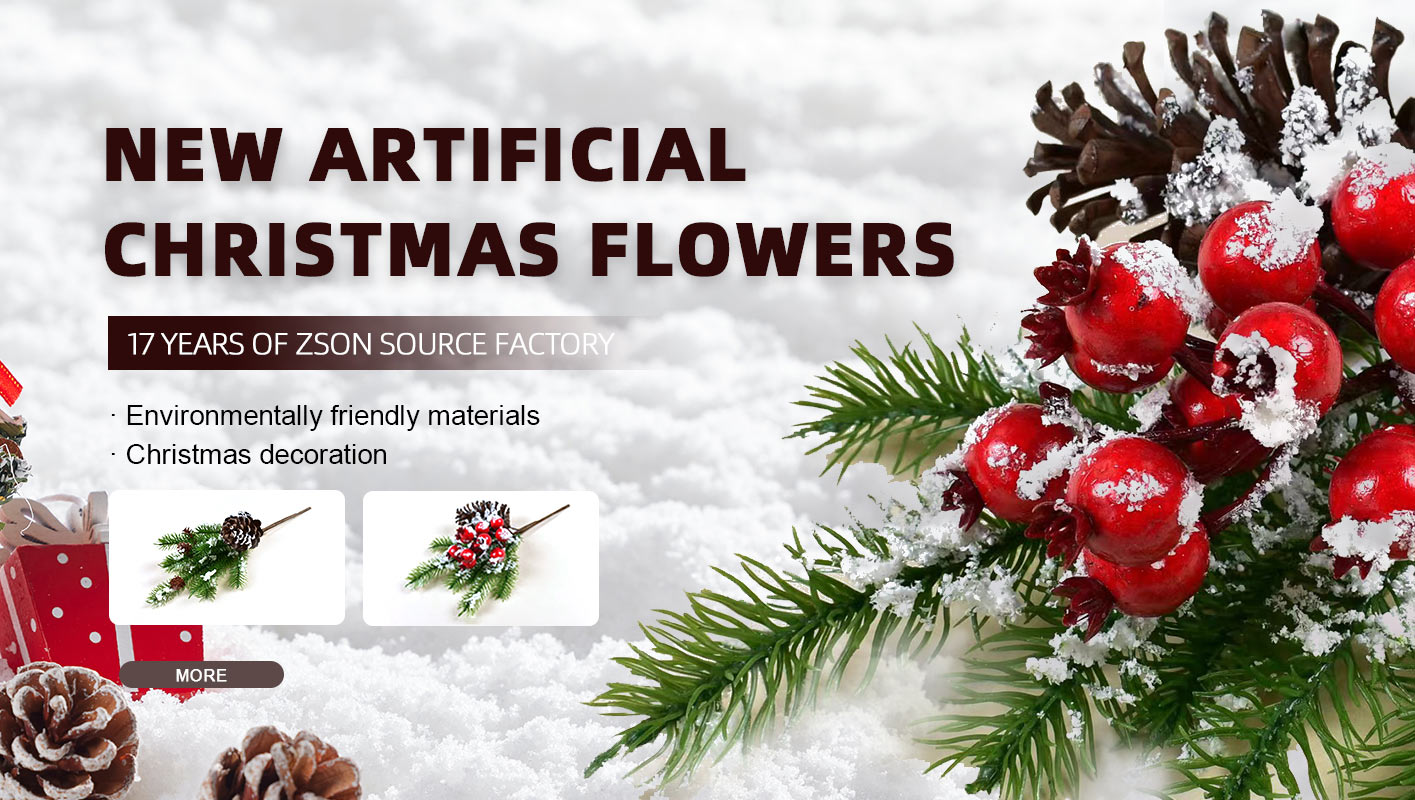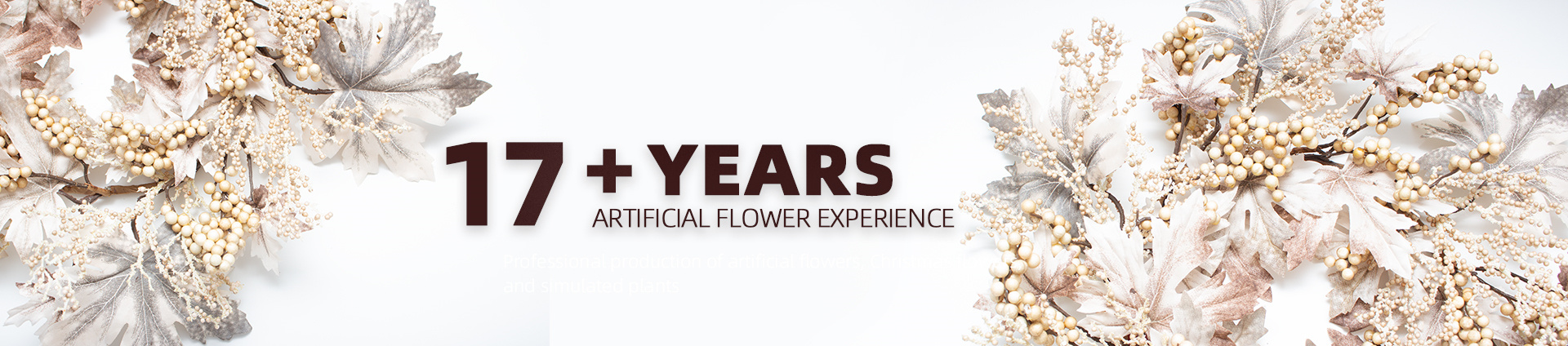
Berry stems usually create visual density by filling gaps with clusters of small, rounded elements, while flower stems create larger focal points through petals, blooms, and contrasting shapes. A fuller artificial arrangement normally uses both: flowers attract attention, and berry stems connect the main blooms with foliage and seasonal accents.
The best ratio depends on the vase opening, arrangement height, viewing direction, and desired style. A compact table centerpiece needs a different structure from a large retail window installation.
Fullness is not simply the number of stems in a container. It comes from the relationship between volume, spacing, texture, and silhouette.
An arrangement may contain many narrow flower stems yet still appear sparse. A smaller number of branched berry sprays can occupy more visual space because berries are distributed across several directions.
Four factors influence perceived fullness:
A wide branch covers more horizontal area than a straight stem. Flexible wire can help spread the branch, but it should not be bent beyond the product’s structural limit.
Closely spaced berry clusters add texture and help hide internal supports. Large flowers create stronger focal areas but may leave gaps between blooms.
Dark berries against pale flowers appear more prominent. Similar tones create a softer, blended arrangement. Autumn palettes often combine burgundy, orange, gold, cream, brown, and muted green.
A centerpiece viewed from every side needs balanced coverage around the container. A mantel or wall display can concentrate most decorative material toward the front.
artificial berry stems are useful as filler, transitional texture, and seasonal detail. They can connect large flowers with leaves, pumpkins, pinecones, or evergreen elements without competing with the primary focal bloom.
Our berry product range includes artificial fall berries, Christmas Berry Twigs, glitter berry stems, and Berry Wreath components. Depending on the design, products may use wire, foam, plastic, silk-like materials, paint, glitter, or other decorative finishes.
Berry stems work especially well in:
autumn wreaths and garlands
Thanksgiving centerpieces
Christmas arrangements
Retail window displays
Hotel and restaurant decoration
Rustic or farmhouse-style interiors
Craft and seasonal DIY collections
Flower stems establish the identity of an arrangement. Roses may create a formal effect, gypsophila can add a light texture, and sunflowers can provide a recognizable autumn focal point.
Larger flowers are normally positioned first so their direction and spacing define the composition. Berry branches are then inserted between them to reduce empty areas and connect the visual layers.
Too many identical flowers at equal heights can make a display look flat. Varying stem height, turning blooms in different directions, and leaving limited negative space generally creates a more natural result.
Start with the container and define the desired finished width. Add structural foliage or taller stems first. Place an odd-numbered group of focal flowers where suitable, then use berry stems to bridge the spaces between those focal points.
Short berry branches can soften the lower edge near the vase. Longer branches can extend the outer silhouette. Seasonal accents should remain visible rather than being buried in the densest section.
Step back regularly and inspect the arrangement from its normal viewing distance. Small gaps that seem obvious during assembly may disappear when viewed from across a room.
Yes, when texture and seasonal character matter more than a traditional floral appearance. Berry-only arrangements can suit minimalist autumn displays, winter tables, craft wreaths, and narrow vases.
However, berry stems with the same size and color throughout may produce a heavy or repetitive result. Combining matte and glossy surfaces, varied berry sizes, leaves, and restrained foliage can create more depth.
As an artificial berry stem OEM/ODM manufacturer, we can develop decorative combinations based on a buyer’s target season, color story, size range, and sales channel. Customization may include berry color, branch shape, overall height, stem length, foliage pairing, pumpkin or pinecone accents, and packaging.
Our factory has decades of experience in artificial floral craftsmanship and occupies more than 4,000 square meters. Experienced production personnel complete many assembly and attachment operations by hand, while our inspection process checks appearance, component security, dimensions, and packing condition.
Before mass production, a physical sample is important. Photographs may not accurately communicate branch flexibility, surface texture, scale, or the amount of visual volume one unit creates.
Berry stems usually fill small gaps more efficiently, while flower stems create the main visual mass and identity. For a rich seasonal arrangement, use flowers as focal points and berries as structured filler.
A fuller display does not require packing every opening. Controlled spacing, several height levels, varied textures, and a stable outer silhouette produce a more convincing arrangement than simply adding the maximum possible number of stems.