Artificial Flowers are often a better choice for long-term decoration because they maintain stable color and shape, require little care, and can be used repeatedly across different spaces and seasons.
Artificial flowers do not wilt like cut flowers. When stored and cleaned properly, they can remain suitable for repeated decorative use over an extended period.
Their service life depends on:
Material quality
Color stability
Assembly strength
Storage conditions
Exposure to sunlight
Cleaning method
Packaging protection
Real flowers have a naturally limited display period. Artificial flowers provide more stable planning for commercial projects that need a consistent visual effect.
Yes. Artificial flowers do not require watering, trimming, fertilizing, or daily replacement.
Routine care normally includes:
Removing surface dust
Checking loose petals
Adjusting bent stems
Cleaning display containers
Storing products away from moisture
Inspecting products before reuse
This is particularly useful for high-traffic commercial spaces where staff have limited time for floral maintenance.
Artificial flowers can be developed for spring, summer, autumn, winter, Christmas, weddings, festivals, and other themed events.
Seasonal products may include:
Spring flower stems
Autumn berry branches
Pumpkin decorations
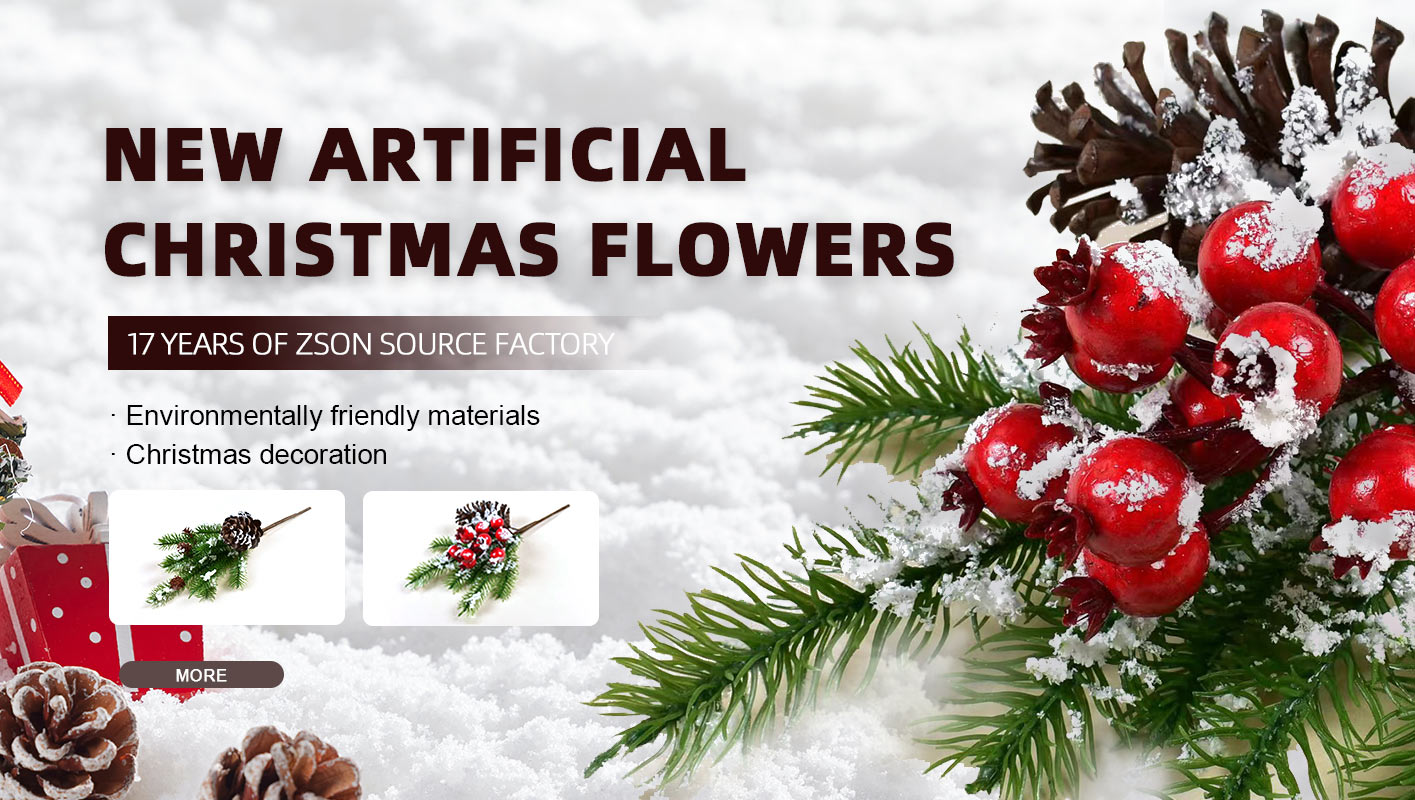
Christmas Berry Twigs
Pinecone stems
Holiday wreaths
Mixed seasonal bouquets
Our seasonal artificial flower products include fall stems, berry branches, wreaths, pinecone stems, and Christmas Decorations.
Businesses can reuse seasonal products during annual campaigns, helping simplify decoration planning and inventory management.
Artificial flowers can be produced in colors that are not always available in fresh flowers. The color can be coordinated with furniture, packaging, store interiors, event themes, or brand identity.
Color development should consider:
Petal base color
Edge shading
Leaf tone
Stem color
Arrangement balance
Lighting environment
Batch consistency
Realistic products usually require more than one flat color. Natural-looking shading and slight variation can make petals and leaves appear more lifelike.
Artificial flowers are widely used in areas where decoration must remain consistent for long periods.
Suitable locations include:
Hotel reception desks
Restaurant tables
Retail window displays
Shopping mall decorations
Office lounges
Event stages
Wedding venues
Residential showrooms
They can also be combined with vases, baskets, wreath frames, branches, and seasonal ornaments.
Realism depends on the details that people notice when viewing the product from a normal distance.
Important factors include:
Natural petal proportions
Soft color transitions
Correct flower scale
Realistic leaf arrangement
Flexible stems
Natural bending
Balanced bouquet density
Suitable texture
First-hand production experience shows that a flower can look artificial when every petal has the same angle or color. Slight variation in direction, height, and tone often creates a more natural appearance.
A Commercial Grade artificial flower supplier should provide stable production, packaging protection, design support, and consistent delivery.
The factory was established in 1997 and has more than 17 years of industry experience. Its production area exceeds 4000 square meters and includes experienced craftsmen and a professional design team.
Production covers artificial flowers, faux stems, bouquets, wreaths, berry branches, fall décor, and Christmas decorations. The factory also supports one-stop online and offline service for overseas buyers.
Yes. An OEM ODM Manufacturer of artificial floral decorations can help develop products based on drawings, reference samples, seasonal themes, colors, packaging, and target market requirements.
Possible customization includes:
Flower type
Petal color
Stem length
Leaf structure
Bouquet size
Wreath diameter
Seasonal combination
Packaging design
Private-label details
Share the target application, flower style, color palette, materials, dimensions, seasonal theme, packaging format, and purchase quantity through the contact service. The requirements can then be reviewed for standard products or a customized collection.